


The Role of Team Communication in Enhancing Your Speedsoft Strategy

Updated: Jul 25
Speedsoft is a fast-paced, adrenaline-filled game that demands more than just quick reflexes and accurate shooting. Success on the field depends heavily on how well a team communicates. Without clear and effective communication, even the most skilled players can find themselves outmaneuvered and outplayed. This post explores why team communication is essential in Speedsoft and offers practical tips to improve it, helping your team perform better and enjoy the game more.
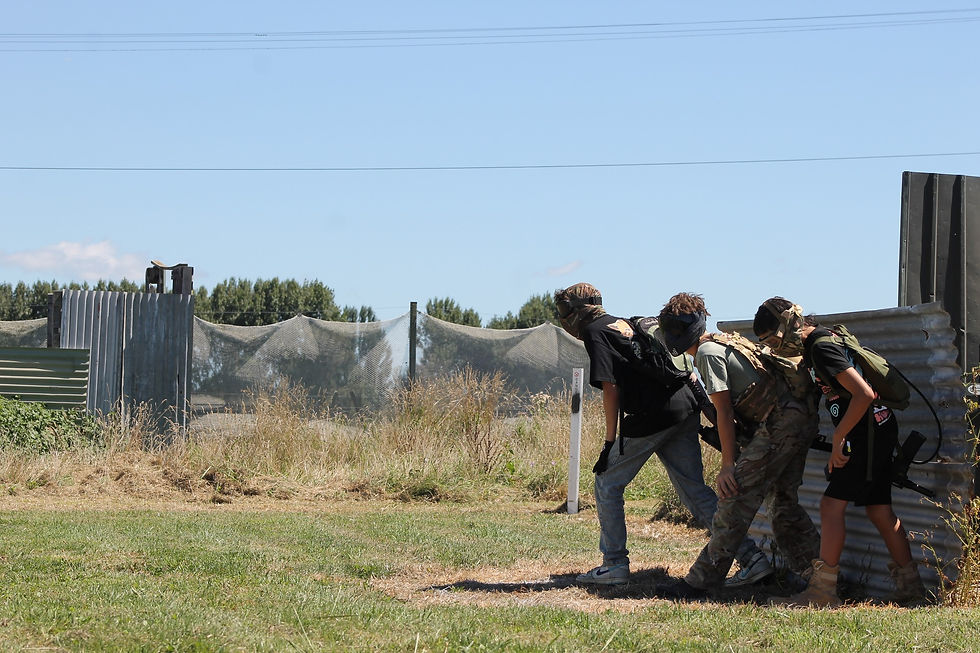
Why Communication Matters in Speedsoft
Speedsoft is a team sport where coordination can make the difference between victory and defeat. The game environment is dynamic and often chaotic, with players moving quickly, obstacles blocking views, and opponents trying to outsmart each other. In such conditions, communication helps your team:
Share real-time information about enemy positions and movements.
Coordinate attacks and defenses to cover each other effectively.
Avoid friendly fire by knowing where teammates are at all times.
Adapt strategies quickly based on changing situations.
Without communication, players act independently, which often leads to confusion and missed opportunities.
Types of Communication in Speedsoft
Effective communication in Airsoft is not just about talking. It involves several methods:
Verbal communication: Quick, clear calls like "left back," "cover," or "pushing" keep everyone informed.
Hand signals: When silence is needed, hand gestures can convey messages without giving away your position.
Pre-game planning: Discussing roles, strategies, and signals before the match sets a strong foundation.
Post-game debrief: Reviewing what worked and what didn’t helps improve future communication.
Using a mix of these methods ensures your team stays connected even in noisy or visually obstructed environments.
Practical Tips to Improve Team Communication

Improving communication takes practice and commitment. Here are some actionable tips:
1. Establish Clear Roles and Responsibilities
Assign specific roles such as Forward, Mid, or Back. Each player should know their primary tasks and how to report information. For example, Backs can focus on spotting enemies and relaying their positions quickly.
2. Develop Simple and Consistent Signals
Create a set of hand signals or code words that everyone understands. Keep them simple to avoid confusion. For instance, a raised fist could mean "hold position," while a flat plam pointing shows the dierection of the oposition.
3. Use Short and Direct Messages
Long explanations waste time and can cause misunderstandings. Use brief phrases like "two left," "push," or "Hold." This keeps communication fast and efficient.
4. Practice Communication Drills
During practice sessions, focus on communication drills. Simulate scenarios where players must rely on signals or quick calls. This builds muscle memory and confidence.
5. Stay Calm and Focused
In the heat of the game, it’s easy to panic or shout randomly. Encourage your team to stay calm and speak clearly. Calm communication helps maintain control and improves decision-making.
Examples of Communication Impact in Speedsoft
Consider a team playing on a large outdoor field with dense bunkers. One player spots an opponent pushing forward. By quickly signaling and calling out the oponents position, the team can adjust their defense and prevent a surprise attack. Without that communication, the opponent might have eliminated several players before being noticed.
In another example, a team uses hand signals to coordinate a synchronized attack on the oposition bunkers. Each member knows when to move and where to cover, leading to a successful capture. This level of coordination is only possible with practiced communication.

Building Communication Habits for Long-Term Success
Communication is a skill that improves with time. Teams that prioritize it tend to perform better consistently. Here are ways to build lasting habits:
Regular team meetings: Discuss communication strategies and update signals as needed.
Encourage feedback: After games, ask teammates what communication worked and what didn’t.
Celebrate good communication: Recognize moments when communication helped win a round to reinforce its value.
By making communication a core part of your Speedsoft culture, your team will become more cohesive and effective.
Strong team communication transforms Speedsoft and Airsoft in general from a chaotic scramble into a well-orchestrated game. It allows players to share vital information, coordinate moves, and adapt quickly to changing situations. Whether you are a beginner or an experienced player, focusing on clear, concise, and consistent communication will elevate your team’s strategy and enjoyment of the game. Start practicing these tips today and watch your Airsoft performance improve dramatically.
Ronin
AHB Pres
Scott Tuck



Comments